
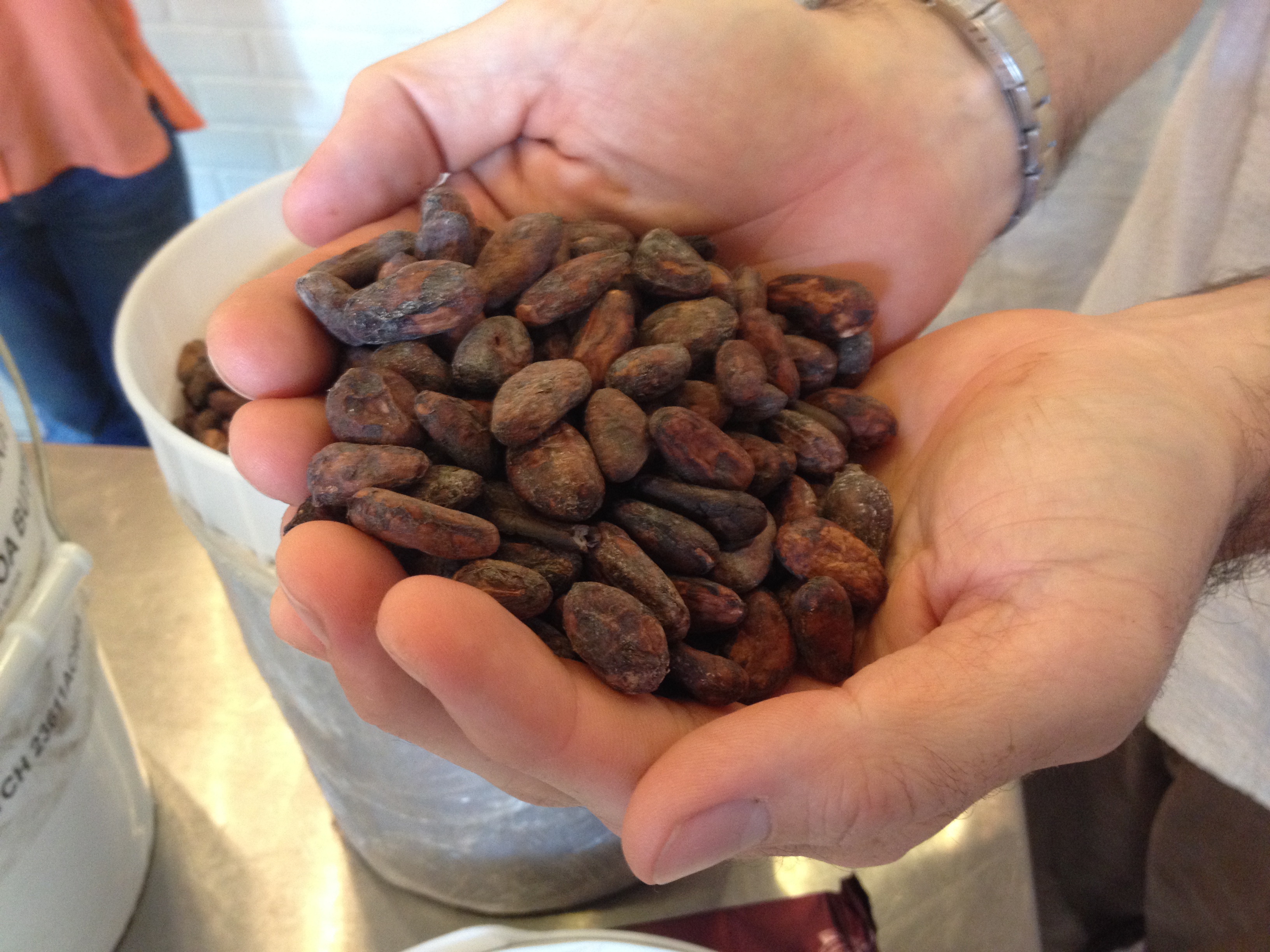
 You say, “cocoa”, I say, “cacao”. Any way you say it, the raw bean from which chocolate is made has a ton of health benefits. It’s also delicious, especially if you like your chocolate on the bitter side.
When we think of chocolate, most of us envision the Kit Kat bar that calls our name as we check out at the grocery store! If you read the ingredients on their labels you’ll discover that these bars are far from chocolate. Typically the first ingredient is sugar and then you find milk, cocoa butter, and other natural and artificial ingredients. These chocolate bars contain a lot of sugar and may have little of the cacao polyphenol benefits found in raw cacao. Generally, the more the cacao is processed, the fewer of the health benefits it retains.
What are Cacao Nibs?
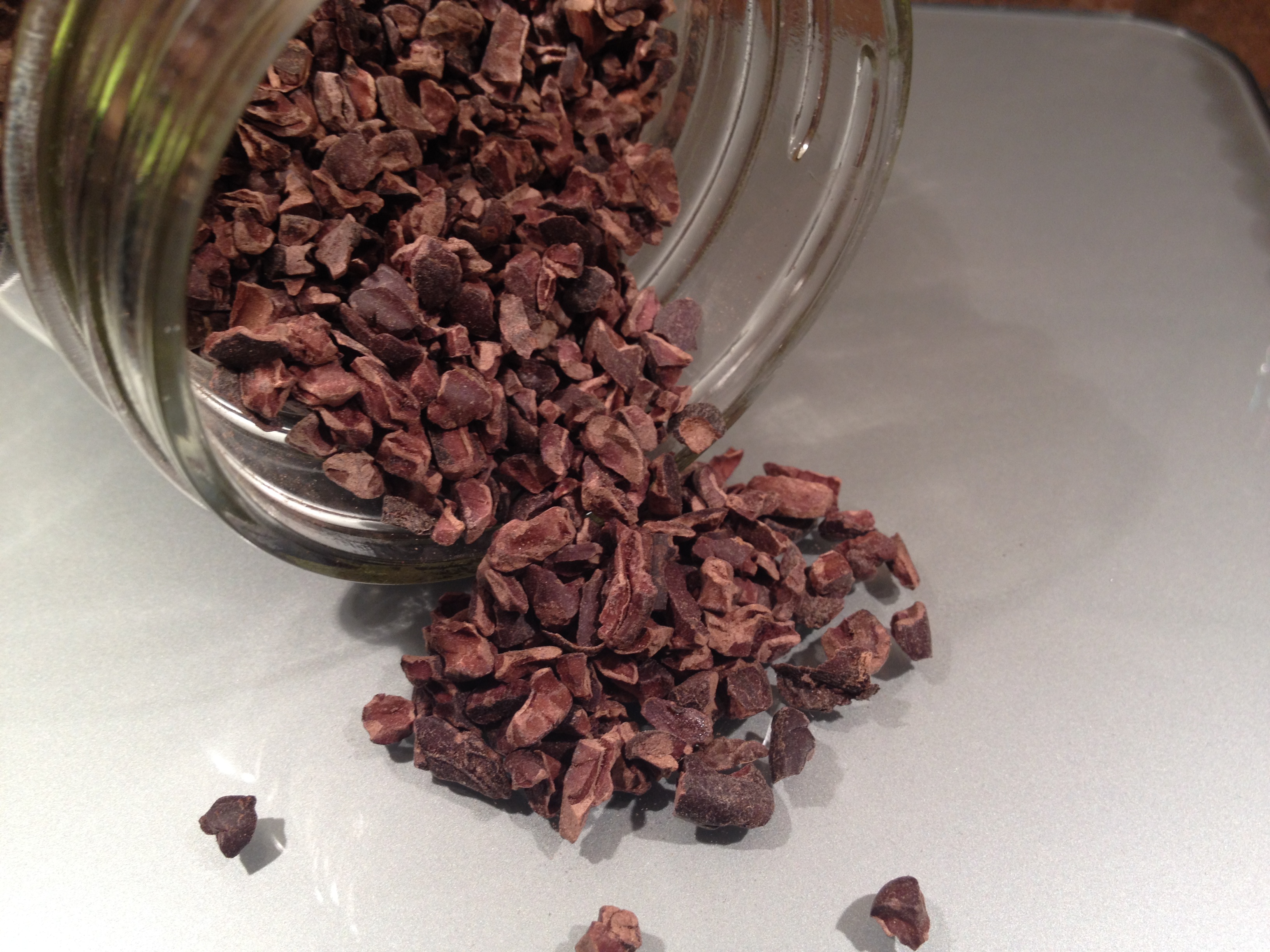 Cacao beans grow in pods on small trees (named Theobroma cacao). When the beans, which have been fermented and dried, are roasted, de-shelled and cracked, they are called cacao nibs. These nibs can be used for baking, cooking or just eaten as they are.
The cacao nibs are also further processed to produce cacao liquor (or mass) and powder. Manufacturers turn these into all types of chocolates when they combine them with cocoa butter, sugar, and other ingredients.
The processing of cacao beans affect the extent to which the beans retain their health benefits.
If you’d like to learn more about growing and harvesting cacao beans and the process of making chocolate, read about a cacao micro farm and small chocolate factory in Oahu, Hawaii (Madre Chocolate).
http://www.manfrottoimaginemore.com/2013/05/17/chocolate-food-of-the-gods/#.UuW5SigQGu1
The following link is also a short introduction to the production of chocolate:
http://www.sfu.ca/geog351fall03/groups-webpages/gp8/prod/prod.html
Nutritional Profile and Health Benefits
Besides being a tasty treat, cacao nibs:
- Are high in dietary fiber, carbs, protein and fats,
- Contain oleic acid (heart-healthy monounsaturated fat),
- Are filled with important minerals: iron, magnesium, potassium, calcium, sulfur, copper, and zinc,
- Contain plenty of vitamins: E, B2, B1, B5, B3, and B9 and small amounts of vitamin A and C.
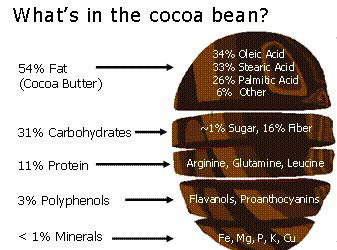
We love the visual breakdown of the cocoa bean’s content, provided by Built Lean on their site at http://www.builtlean.com/2012/04/12/raw-chocolate/#fn-7774-4.
The polyphenols contained in cacao nibs are what give the nibs their greatest health benefits. Their anti-oxidant properties are are said to:
- help protect against heart disease,
- modulate immune response,
- have anti-inflammatory and anti-carcinogenic effects.
One paper analyzing the results of several studies on the beneficial effects of cocoa polyphenols on human health reported that “on a per serving basis, cocoa has higher flavonoid content and antioxidant capacity than red wine (2 times), green tea (2-3 times) and black tea (4-5 times), respectively.” (1) p. 4.
This same paper also reviewed studies that suggested that cocoa may help with tooth health by reducing tooth decay, have anti-obesity effects, reduce the symptoms of chronic fatigue syndrome, help with inflammatory bowel disease, help delay age-related brain impairments, and have positive effects on skin tone and elasticity (when applied to skin rather than consumed). (1) pp. 14-18.
 Cacao has also been sited as having a mood enhancing capacity! “Cacao contains properties with therapeutic levels that positively affect a person’s mood, memory, appetite, pain perception, feelings of attraction, excitement and euphoria. It also contains high concentrations of arginine, an amino acid that increases sexual desire by increasing blood flow throughout the body.” (2)
This might explain why Valentine’s Day is a popular time for chocolate gift-giving. If you’re planning a romantic dinner, try adding cacao nibs to the menu!
 Easy Recipes
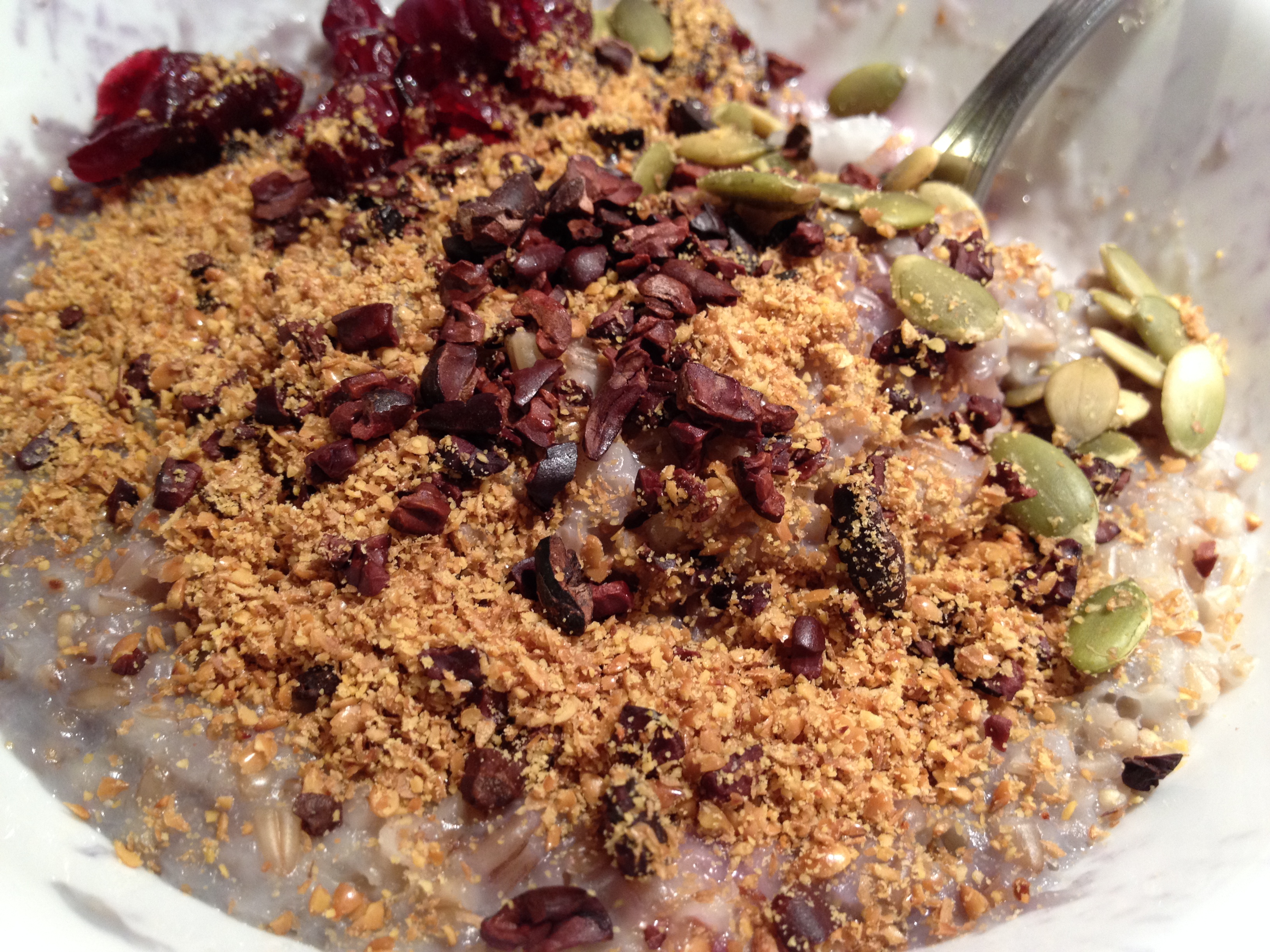
Cacao nibs are great just as a pop-in-your-mouth snack. We also like to:
- Add them to our oatmeal and granola,
- Sprinkle them on yogurt and homemade pudding,
- Substitute them for chocolate chips in our baking,
- Sprinkle on soups like carrot, sweet potato, and pumpkin,
- Add to smoothies.
You can buy pre-packaged and ‘bulk” cacao nibs at health food stores like Planet Organic, Whole Foods, Amaranth. Even President’s Choice Superstore and Loblaw’s carries them.
The following are just a couple of recipes we found that highlight cacao:
Chocolate-Coconut Rice Pudding Recipe (Breakfast) from Washingtonian
Cacao & Zucchini Absorption Pasta from Chocolate & Zucchini
An interesting combination of cacao nibs and zucchini on a pasta using an absorption method of cooking the pasta. Looks good and will try it ourselves!
http://chocolateandzucchini.com/archives/2006/05/cacao_zucchini_absorption_pasta.php
If you love cacao nibs and have used them in your recipes, please share them with us. We’d be happy to post them for all of our followers to try.
Recipe of the Week: Warm Veggie Spinach Salad with Cacao Nibs
Resources and References:
- Andu ́jar, I. et al., “Cocoa Polyphenols and Their Potential Benefits for Human Health,” Hindawi Publishing Corporation, Oxidative Medicine and Cellular Longevity, Volume 2012, Article ID 906252, 23 pages doi:10.1155/2012/906252. Article PDF: Cocoa Nibs research – OXIMED2012-906252
- http://www.livestrong.com/article/461877-nutritional-difference-between-roasted-raw-cacao-beans/








 Aspire, Perspire, Nourish Yourself
You must be logged in to post a comment.