Step Out on Fitness to Spice Up Your Routine

DSCN8181Tired of the same old fitness routine?  Need to find something to spice up your workouts to get excited?  The best thing is to try something different.  A little change can wake up your senses and intensify your experience of a workout.

For those looking for a group experience, CrossFit, Zumba, or Spinning classes could be fun, high energy workouts to crank up your excitement.  Music and camaraderie in these workouts are strong mood boosters, so if you need social encouragement to get your motivation fueled for fitness, then join one of these classes.

If on the other hand, you are looking for a more peaceful workout, with people around you but not necessarily cheering each other on, try Power Yoga or Paddleboard Yoga (for those living close to oceans, rivers, swimming pools).  These yoga workouts are intense because they use strength-building movements or because the poses are done on unstable surfaces requiring balance.

Tell me More About…

Want to know more about these workouts?  Here’s a brief summary:

CrossFit

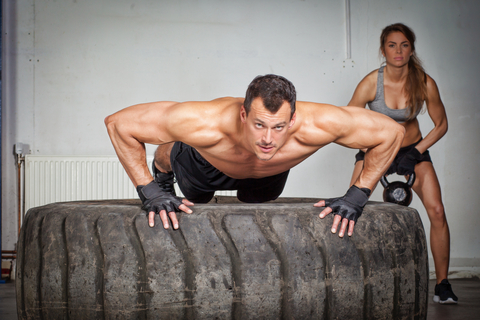
CrossFit is a ‘fitness philosophy’ and workout routine that combines elements from Olympic weightlifting, gymnastics, powerlifting, plyometrics, high intensity interval training, calisthenics, and other aerobic exercises.  The focus is on strength and conditioning to continually improve one’s fitness level and capacity.  At most CrossFit gyms, members follow a typical workout routine, including a warm up, skill building exercises, high intensity ‘workout of the day’ (WOD), and a cool down stretch.  CrossFit aims to prepare one’s body for any fitness challenge by changing up exercises, WOD’s, and routines frequently.

Founded by Greg Glassman and Lauren Jenai in 2000, CrossFit, Inc. is the official organization that formalized CrossFit programming, trains individuals and ‘certifies’ gyms  to offer the programming.  CrossFit is used as a primary fitness training regime in many organizations like the military, law enforcement, fire departments and some high schools in North America.

Be aware, though, that there have been controversial reports about incidents of injury with CrossFit.  If you are going to try it, please go to a reputable CrossFit gym or trainer.  Don’t try it on your own or via video sessions until you’ve had enough experience with it.  Similar to weightlifting and powerlifting, some of the exercises in CrossFit can lead to injury if you don’t do the moves correctly.  Although the programming is supposed to be adjusted to one’s fitness level, as an eager beginner you may push way too hard!

Zumba

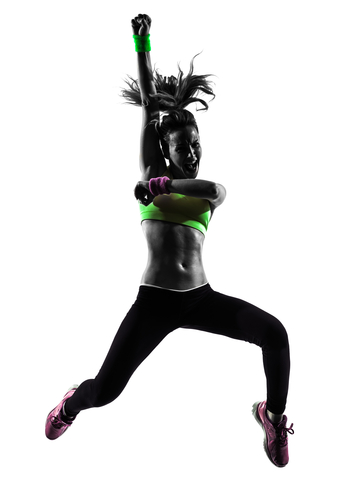
If you love to dance, this is the workout for you.  Zumba is an aerobics class that uses a combination of Latin-inspired music, Rock ‘n Roll, and Reggae music.  The moves are adapted from dances like the Merengue, Salsa, Flamenco, and so on.  Although the classes are choreographed with a trainer leading the class, participants are encouraged to move any way they want to have fun.

The foundation of the Zumba workout is to vary the intensity levels of activity during the exercise period.  This is similar to high intensity interval training, with your heart rate spiking up for short bursts and then coming down for brief rests, and back up.  A lot of calories can be burned while having fun.  In fact,  Zumba prides itself in creating a party-like atmosphere rather than a structured aerobics class.

The American Council on Exercise (ACE) commissioned a study to determine whether Zumba was effective as a fitness activity.  Although it’s a limited study, it showed positive results.  Watch the video to learn more about the study results, and to experience the energy in a Zumba class.

Spinning

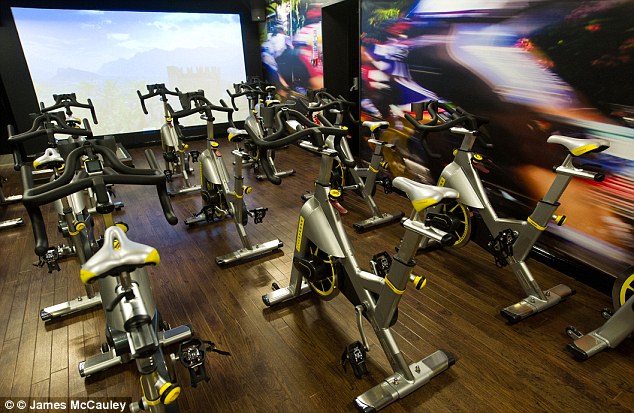
No helmet required for this workout!  You can pick spinning classes that feature upbeat music and a motivating leader who guides your ride; video screens with virtual rides through mountain, coastal winding roads, or other uphill/downhill courses; movie watching nights; and more.  For the casual bike rider to the more dedicated cycle athlete, spinning classes can help you improve fitness level and satisfy your social needs.

©James McCauley

©James McCauley

Spinning classes are held in cycle studios on special stationary bikes or using your own bicycle mounted on a wind trainer, often linked to a computer.  For the competitive person, many classes also provide screens that post the riders’ speeds and other performance statistics.  You can track your progress and race your buddies to the virtual finish line!

As with Zumba, many of the spinning workouts employ interval training programming, i.e. bursts of higher intensity by spinning faster or at higher tension, combined with periods of slower, steady paced cycling.  Workouts may also call for riding seated or standing, performing one legged drills, and all kinds of moves to improve riding skills.  Although spinning is in a group environment, you can work at your own fitness and skill level.

Power Yoga

If you’re looking for a vigorous, intense yoga workout, Power Yoga may be your answer.  This type of yoga, grounded in Ashtanga, is a faster paced practice that helps develop strength and tone muscles, because the movements are done using one’s own body weight emphasizing movement rather than holding poses.  Given the focus on movement, you’ll also be working on cardio more than in a typical yoga practice.

Want to give it a try before going to a studio? Then follow Bryan Jones along in his half-hour Power Yoga session on YouTube:

Paddleboard Yoga

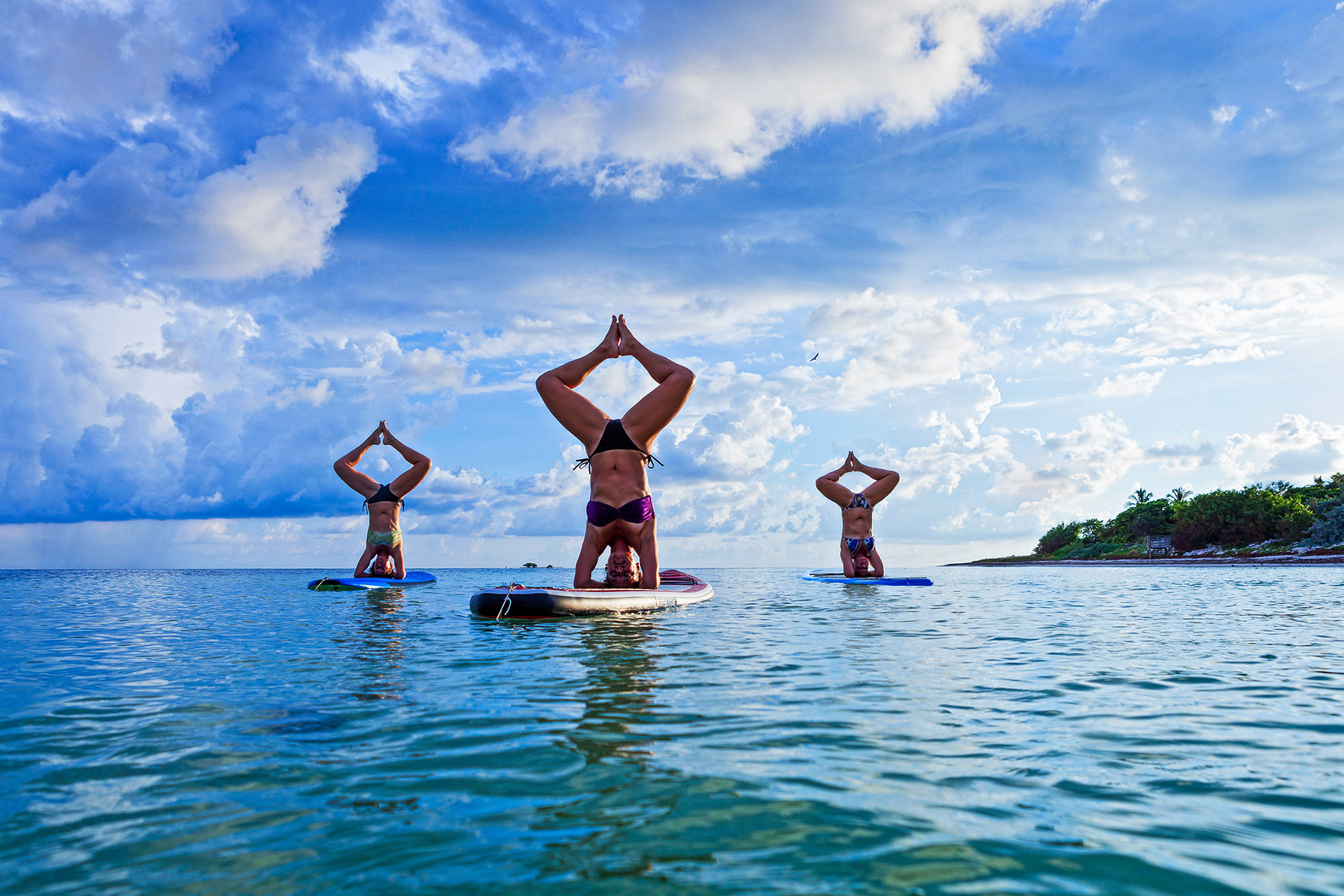
This yoga practice might be a stretch for some people who live in land-locked areas! However, Paddleboard Yoga is becoming more popular in cities with rivers or even in swimming pools.  So, you might want to search for venues close to your area.

This type of yoga is performed on Stand Up Paddleboards (SUPs) in the ocean, river, lake or swimming pool.  These surfboards are longer and wider than a standard surfboard to make them steadier for stand up surfing.  For beginner SUP riders or yogis, even a calm water environment may be a challenge for holding yoga poses.  Doing yoga poses on a board, in the water, adds extra challenge to your core and calls for continuous re-balancing.  If you want to push your yoga experience, give Paddleboard Yoga a try and forget about perfect yoga poses on the board.  Just enjoy the novel experience.  The worst thing that can happen is falling into the water and getting back up on the board to give the pose another try!

What’s Your Spice Up Recipe?

Have you tried a different workout routine that spiced up your fitness?  Tell us about it!  Do you have an idea you’d love to try?  Let us know and maybe we can help you make it happen.

References:

Recipe of the Week:  Butternut Squash Cranberry Scones

Posted in Weekly Blogs | Tagged , , , , , , , , , | Leave a comment

Warm Up and Cool Down: To Do or Not to Do?

©Galina Barskaya

©Galina Barskaya

Do you jump out of bed and start doing jumping jacks or hit the elliptical? Maybe that’s your wake-up routine, but most of us need a cup of coffee and a lazy stroll around the house to wake up our muscles.

Some people just don’t like to warm up, stretch or cool down.  When you’re rushed to fit in your regular workout, it might seem like warming up or cooling down is wasting time but it may help keep injuries at bay.

We have a friend who says, “Guys don’t do that stuff!”  If you subscribe to this thinking, we ask you to suspend that thinking, do the research, and decide if warming up and cooling down makes sense for you.

Over the years, the idea of warm ups and cool downs has been debated, researched, and has evolved.  So, what’s the deal with these routines?  Should you do them?  In this post, we look at the issue of pre-and post-workouts from the perspective of the everyday health seeker and not from a pro athlete who is trying to improve performance.

The Debate

As with any opinion (and most research), there are multiple sides to a story, and getting to the core of it can be confusing because the truth is based on so many contextual circumstances and personal interpretations.  For instance, as a recreational athlete, are you trying to improve performance? If so, what kind of performance?  Are you injured?  What’s your competence level with the activity or sport performing?  What primary muscles are used in the activity?

All of these factors determine if and what kind of warm up and cool down you should do.  The research on warm ups and cool downs is mixed because it measures different things.  For instance, some research compares benefits and drawbacks between static and dynamic stretching (see our past post on stretching) .  Other research looks at whether warming up improves performance or reduces muscle soreness.  The list goes on, with some studies having more merit than others.  Dr. Gary O’Donovan compares some of the research on stretching related to warming up.

Here is our quick take on warming up and cooling down:

Warming up and cooling down makes physiological sense.  To get the best effect, be clear of the purpose, and be sensible with intensity and length of pre-and post-workout routines.

Why Warm Up?

To get from an inactive state, like sleeping or sitting, to an active state, like exercising, we need some priming of the muscles and joints.  Generally, warm ups are made to get your muscles warmed, joints loosened up, and all ready to perform.

Muscles create movement through contraction and electrical nerve impulses.  Proper warm ups help muscles contract faster and hold the contractions for longer periods, increase the electrical activity of a muscle, increase its maximum strength, and improve connective tissue’s ability to withstand force.  All of these factors can help reduce potential injuries. (Ref, International Sports Sciences Association, pp. 217-218.)

From a psychological perspective, warming up can also help you get in the groove.  Most people say that the toughest part of exercising is getting started.  Once they’ve started their activity, the task gets easier.  Mentally, warm ups may get your brain in gear to work harder or run faster!

When and How to Warm Up?

If you’re hoping to improve performance, research your specific sport to understand how warming up will help you get that edge.  For example, static stretching before a workout that requires flexibility such as gymnastics may be beneficial; however, dynamic stretching like butt kicks or jogging slowly may be better for runners.  Generally, the most recent thinking is that static stretching should be done after your primary workout (cool down) and dynamic stretches specific to your sport before the main activity.

Learn about the type of warm up activities that may help to prep you for the activity to come.  They should be movements specific to your sport.  For example, before running, leg swings help to loosen up hip flexor muscles.  A few golf swings or torso twists before hitting the links may help with your back and shoulder muscles.

Remember, warm ups should not be so long or hard that you are tired before you begin your workout.  Five to 10 minutes for warming up should be sufficient.  The warm up prepares you to work at full potential during the workout to come!

Why Cool Down?

As you wind down your workout, it’s time for your heart rate to slow down, and body temperature to lower.  During exercise, blood gets redirected to where it is needed most; that is, away from the heart, kidneys, liver, stomach, intestines and towards the extremities used for exercise.  After workouts, you want to help your body return to its resting rates, doing it gradually through a cool down period.

An aerobic, light cool down (like walking) can also reduce muscle soreness after exercise since it will remove lactic acid accumulated in the muscles and helps repair micro-tears created in the cells during intense workouts.  Repairing of microtrauma is best dealt with through rest.

How to Cool Down

Cool downs need not be lengthy or intense.  Five to 10 minutes should suffice, with activities that slow down heart rate, and stretch out large muscles used during the workout.  For example, after your elliptical workout, walk around the gym for a few minutes, do some walking lunges, a few arm circles, and then some static stretches on a mat.

Don’t confuse your cool down with a more extensive flexibility and stretching routine.  We’ve discussed the importance of working on your flexibility through stretching in a past post.  Cool downs are short activities done to gear down your heart rate and muscles from your workout.

What’s Your Routine?

We’d love to know about your warm up and cool down routine!  Do you make time for these activities or simply skip them?  How have these helped you?  Please share with us in the comments section.

References:

Recipe of the Week:  Fish Tacos with Fresh Veggies

Posted in Weekly Blogs | Tagged , , , , , | Leave a comment