

©Jgar
Food has always been a central theme in my life. Growing up, our family life revolved around family dinners, parties where the highlight was food, weddings with multi-course dinners, summer picnics with plenty of junk food and gourmet meals.
As I reflect on the meaning of food, I realize that it more than sustains me; it makes me happy…most of the time. When I overindulge or eat foods to which I have sensitivities, that’s another story! I get miserable and uncomfortable and worst of all I feel guilty about any overindulgence.
Calling My Bluff

©Roman Milert
I thought I had worked out my tipping point relationship with food, where I could control my eating habits to maintain good health.
My commitment to healthy, clean eating has been pretty good until a recent hectic period in my life. In the last 10 months, I have slacked off my nutrition because life has been moving way too fast for me to keep up. I moved to a new country, started a new business (www.apnlodging.com), sold the house I was living in for the past 20 years and am generally trying to figure out life! Have I made enough excuses?
So, when I recently read about The Ultimate Oxygen 90 Day Challenge in Oxygen Magazine, I was draw in by the opportunity. This fitness and nutrition challenge is tagged as a chance to get “your best body ever in 90 days”. When I first read about the challenge, I thought to myself, “This is a great way for me to clean up my act.”
Well, I started the program about a week ago and let me tell you that the meal planning has been more challenging than I thought. The fitness routine – no problem. I can fit in those workouts and do more than prescribed. The nutrition side – totally flying by the seat of my pants! I looked at the sample meal plan and tried to follow it but quickly dismissed it after 2 days. I must admit that there was a lot happening the last week so it was the worst possible time for me to try to follow a strict meal plan: wedding anniversary, two dinner parties that I hosted, a dinner business meeting, and date night with my hubby. All kinds of reasons to cheat.
Realistically, the meal plan outlined in the program is not sustainable for very active people who want to eat clean 365 days per year. It’s designed to prepare bodies for figure competitions as a short term program. Although it’s doable with discipline, I just can’t commit to it. During this last week, all I can think about is FOOD! The meal plan from the Oxygen Challenge makes me think of what I can’t eat rather than what I can.
Flipping the Switch

©Benjaminec
This past week, I’ve been miserable about my inability to stick to the meal plan. In my brain, I know it’s not the right thing for me but I hate being a quitter. Am I rationalizing things? Why is my gut telling me to STOP and re-think this?
A phone call to Mary reinforced my gut feel. She reminded me of the importance of long-term clean eating. Her straight up talk about our bodies needing good fats, staying away from fat-free foods that are loaded with sugars for taste, eating a variety of whole foods, and so on made me feel like a nutrition newbie again! A swift kick in the rear made me realize that I need to do my own thing.
Now What?
Am I a quitter? No. I’m going to finish the Challenge but on my own terms. Since I’ll be starting my marathon training in September, I’ll need to modify the Oxygen training program so why not modify the meals?
Here’s my plan for the nutrition side:
1. I have calculated my calorie and macro nutrient needs based on my specific circumstances, i.e. body fat percentage, current weight, fitness activity level and goals. Although I don’t plan to count calories and specific macro nutrients every day, I will keep a food diary to make sure I stay within reasonable ranges. Once I have a couple of days figured out, I can estimate on the go. Portion control will be the focus!
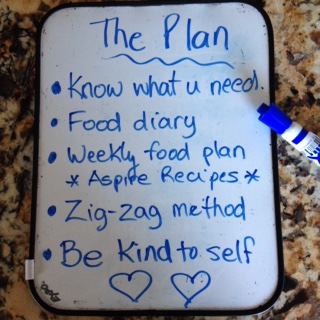 2. With a breakdown of the fats, carbs and protein needed each day, I will follow the Zig-Zag method of meal planning by Dr. Fred Hatfield to reasonably and safely lose body fat and weight, and build muscle. This means that on my less active days I’ll eat less, and on my more active days I’ll eat more. This keeps the body’s metabolism revved up for fat loss.
3. I will plan meals and snacks for each week in advance. The key is to have it figured out before the week begins. We have a wide variety of recipes on our site that are healthy and clean so putting meals together should be easy.
4. My family will be eating my way. I don’t want to make separate meals for them, and I want them to benefit from good, clean eating.
5. I will be kind and understanding towards myself through this process.
“Plans are only good intentions unless they immediately degenerate into hard work.” – Peter Drucker
Do you have advice and suggestions for me? Please share because the hard work for me is just beginning!
Lia






 Aspire, Perspire, Nourish Yourself
You must be logged in to post a comment.